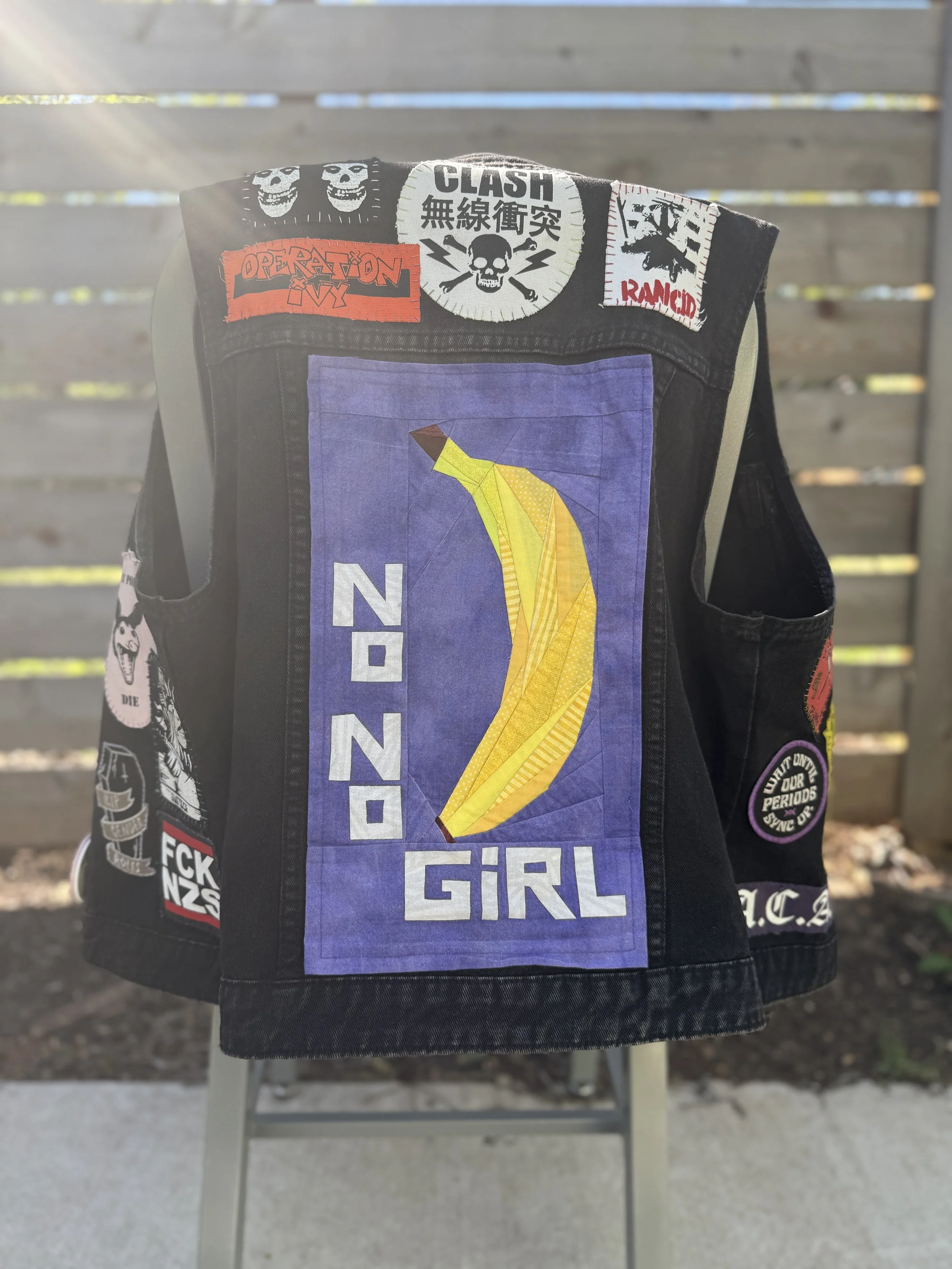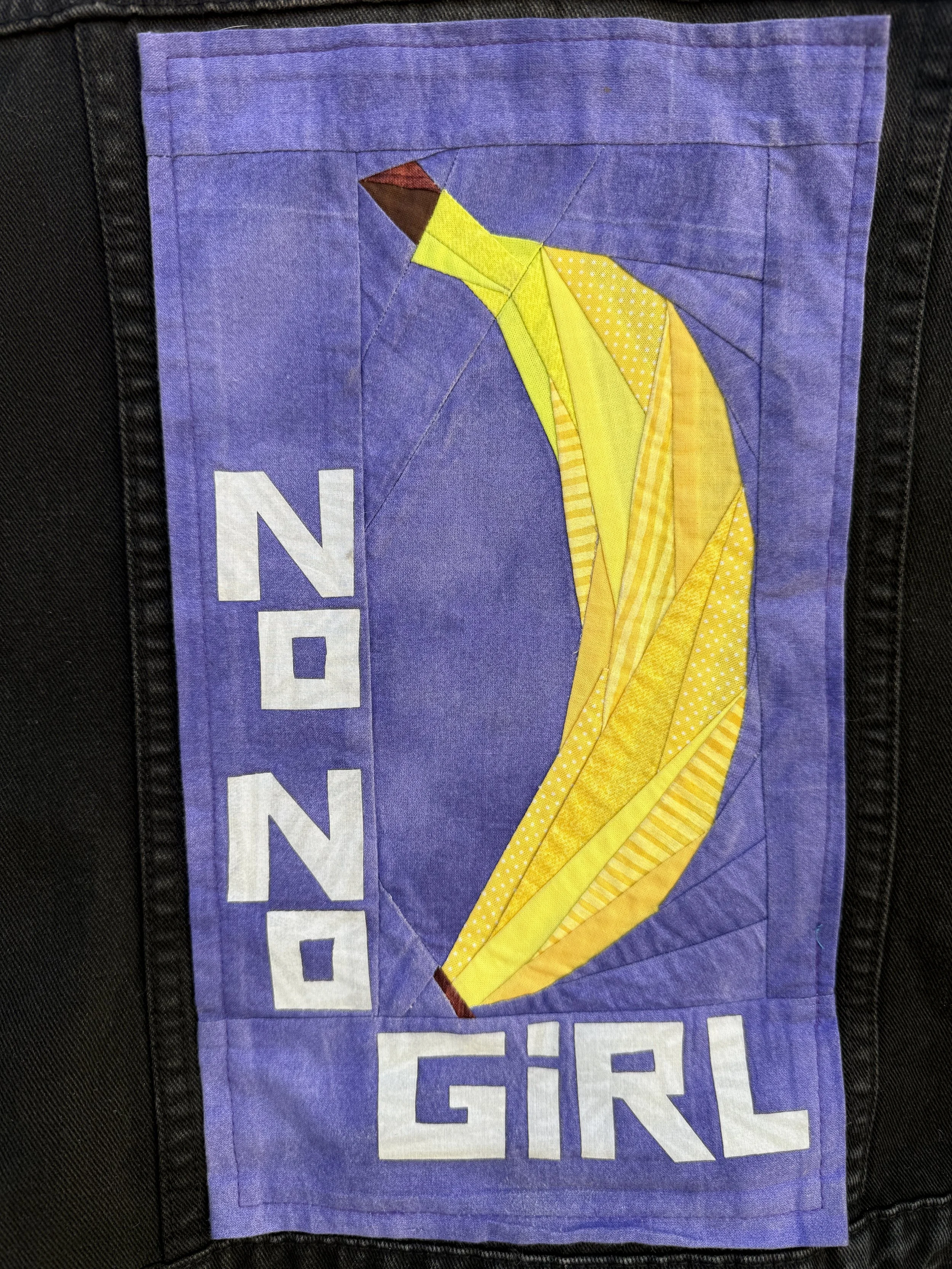
No-No Girl Vest
2025 - 7.5”x14” - Back Patch on Vest - Machine pieced using Foundation Paper Piecing and raw edge applique; Banana pattern by LoverOfLifeDesigns
One of the more haunting facts about my family history I have uncovered is that my grandmother, Chiyeko, was a no-no girl, having responded no to both loyalty questions on the survey administered by the US government to all the people of Japanese ancestry they had incarcerated. Those two questions were:
If the opportunity presents itself and you are found qualified, would you be willing to volunteer for the Army Nurse Corps or the WAAC?
Will you swear unqualified allegiance to the United States of American and forswear any form of allegiance or obedience to the Japanese emperor, or any foreign government, power, or organization?
A 17 year old high school student, born in California, who had never been to Japan, my grandma almost certainly was not in any way loyal to the emperor, but was disturbed by the way the US had treated her. It also seems that her family was hoping that in renouncing their American citizenship and be reunited in Japan (this never happened).
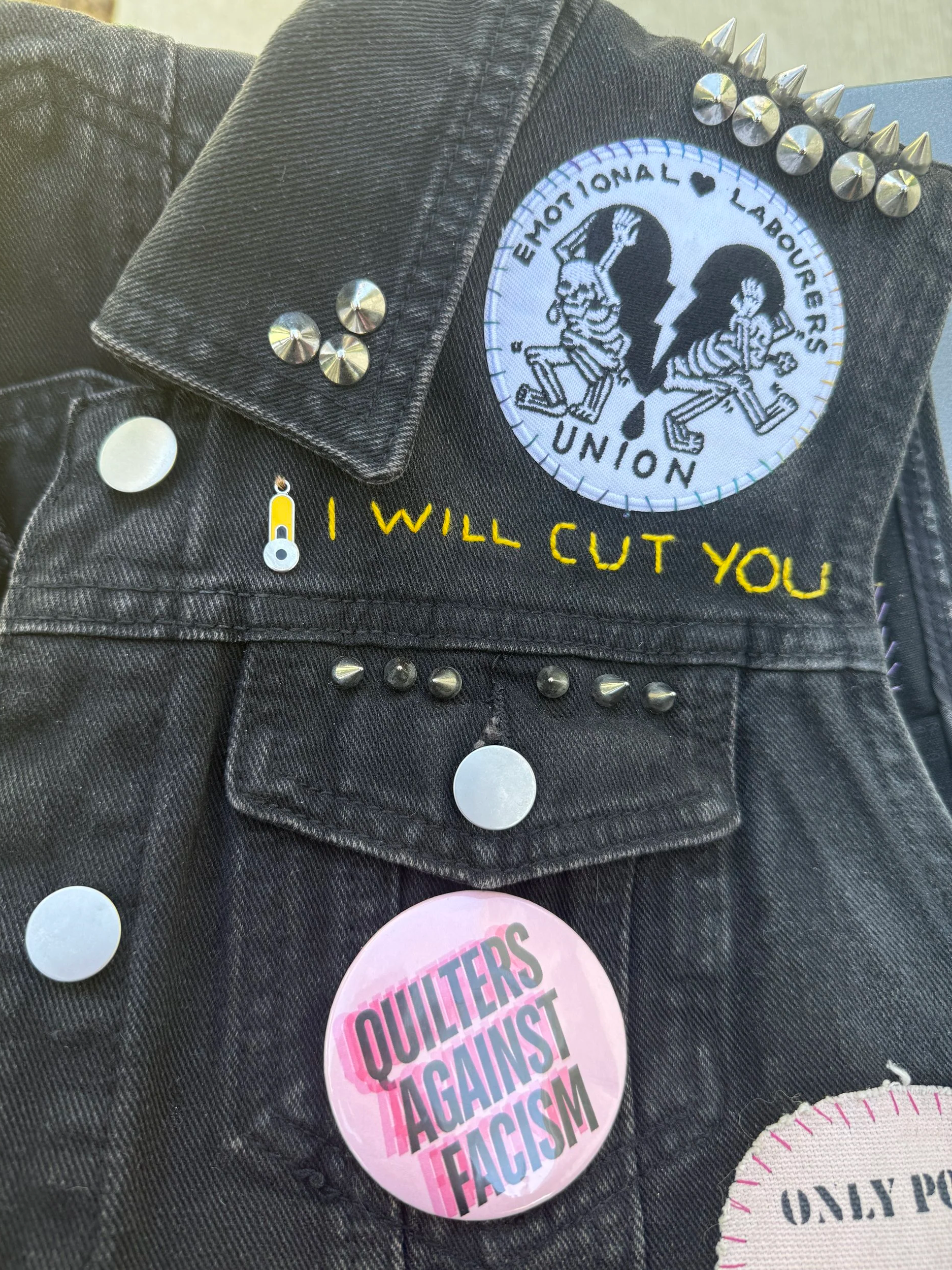
Fast forward 80 years and Chiyeko’s granddaughter (me!) is a geriatric millennial punk rock kid at heart exploring given and chosen identities, fluidity and expression. So I made this back patch for a vest covered in patches and studs. The banana is a not-so-subtle nod to the concept of being overly assimilated into white culture, or “yellow on the outside but white on the inside”.
Answering ‘no’ to both loyalty questions was a controversial and stigmatized position taken by only about 15% of those surveyed. My grandfather and grandmother met after the war and had both answered ‘no’ to both questions. No-no families, like ours, were largely shunned by a Japanese American community that emphasized loyalty and military service after the war.
For my mom and her siblings, this meant being excluded from many aspects of Japanese and Asian culture in America, and in turn, influenced my relationship to my Asian identity. I spent a lot of time feeling “not that Asian” or “not Asian in the right way”. It’s only in the past few years that I have been unlearning these harmful messages and re-framing my ethnic and mixed identity.
Source: Densho, No-no Boys